· Umm Aishah · Islamic Studies · 3 min read
Teaching Kids About Zakat: The Beauty of Giving in Islam
Zakat is not just charity — it is purification. When we teach our children to give, we teach them that everything belongs to Allah.
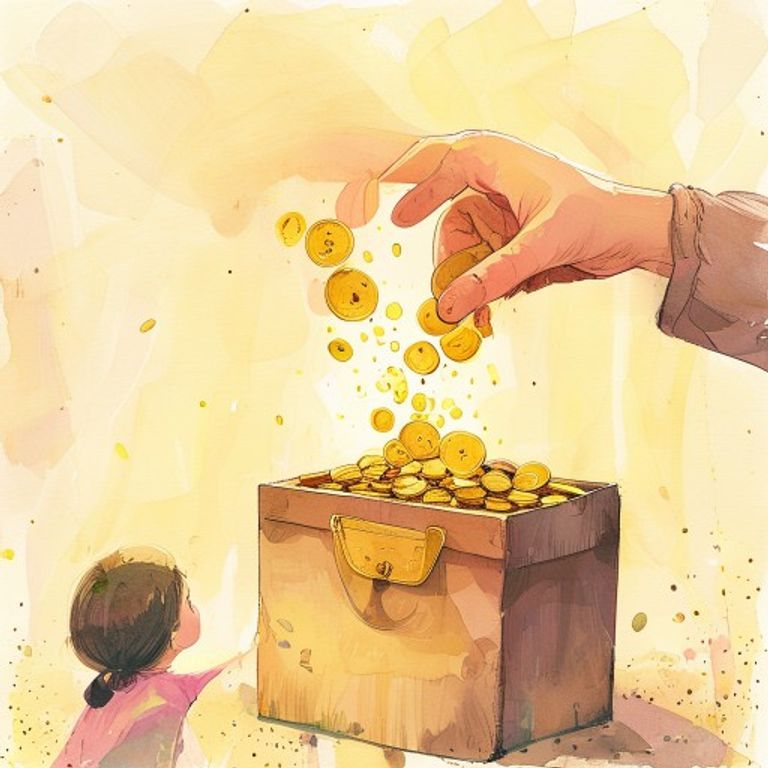
The Prophet (ﷺ) said: “The upper hand is better than the lower hand. The upper hand is the one that gives, and the lower hand is the one that receives.” (Bukhari and Muslim)
Teaching children about zakat is teaching them about the soul of Islam — that nothing truly belongs to us, and that giving is not a loss but a purification.
What is zakat in simple terms
For young children:
- Zakat means sharing what Allah gave you with people who need it.
- Allah gives us toys, food, and money. He asks us to share some of it.
- When we share, Allah multiplies what we have left.
For older children:
- Zakat is 2.5% of your savings, given once a year to those in need.
- It is one of the five pillars of Islam — as important as salah and fasting.
- Allah says: Take from their wealth a charity by which you purify them. (Quran 9:103)
When to start teaching
Children can begin learning about giving from age 2–3:
- Give this piece of fruit to your brother — that is sadaqah!
- You shared your toy? MashaAllah, that is charity!
By age 5–6, they can understand:
- The concept of saving and sharing
- Why some people have less than others
- How giving makes Allah happy
By age 8–10, they can:
- Calculate simple zakat amounts
- Understand the eight categories of zakat recipients
- Participate in family zakat giving
Practical ways to teach
Give them a charity jar. Every time they receive money (Eid, gifts, allowance), they put some in the jar. When it is full, they choose where to give it.
Involve them in giving. Let them help pack food bags, choose toys to donate, or hand money to someone in need. The physical act makes it real.
Use their Good Deeds Tracker. Add a “charity” column. Every time they give, they mark it.
Tell stories. The Prophet (ﷺ) was the most generous of people. Tell them how he would give everything he had — even when he had nothing left.
Connect it to Allah’s names. Allah is Al-Kareem (The Generous). When we give, we are imitating Allah’s attribute. Our Names of Allah Flashcards include Al-Kareem.
The eight recipients of zakat
Teach older children about who receives zakat (Quran 9:60):
- The poor (fuqara)
- The needy (masakeen)
- Zakat administrators
- Those whose hearts are to be reconciled
- Those in bondage (freeing slaves)
- Those in debt
- In the cause of Allah
- The traveller (stranded)
This teaches children that zakat has a system — it is not random. Allah ordained it with wisdom.
Start a family zakat tradition
Every year, sit together as a family and:
- Calculate your zakat together
- Choose where to give (local masjid, orphan sponsor, food bank)
- Make dua for the recipients
- Thank Allah for what you have
Download our resources
- Good Deeds Tracker (Printable) — include charity as a daily deed
- Kindness Calendar (Printable) — 30 days of giving activities
- Dua of the Day Card (Printable) — includes duas for giving
May Allah make our children generous, purify their wealth, and grant them the blessing of giving. Ameen.