· Umm Aishah · 8 min read
Islamic Preschool at Home: What to Teach Ages 2-4 (Week-by-Week)
A calm, method-first Islamic preschool at home for ages 2 to 4: what to teach in Qur'an, duas, Arabic and adab, a 12-week plan, and a gentle daily rhythm.
When my eldest was three, I bought a thick preschool workbook, sat her at the table and lasted four days. She was bored, I was frustrated, and nobody was learning anything. What finally worked was much simpler: short moments of Qur’an, a few duas said at the right time, Arabic letters in her hands, and a lot of good manners practised at the dinner table.
That is what Islamic preschool at home really is. For ages 2 to 4 you do not need a curriculum box. You need a daily rhythm built around the prayers, five or six things to teach, and a lot of repetition. Below is exactly what to teach at this age, a week-by-week 12-week plan, and a sample day you can copy.
Why the early years matter so much
The Prophet (ﷺ) said:
كُلُّ مَوْلُودٍ يُولَدُ عَلَى الْفِطْرَةِ
“Every child is born on the fitrah (the natural disposition of Islam)…” (al-Bukhari 1385)
Your toddler already has the fitrah. Our job at this age is not to pour in information but to protect that fitrah and give it words: Allah, Rabb, Jannah, Bismillah, Alhamdulillah. A three-year-old who says Bismillah before every bite has learned more than one who can recite the English alphabet backwards.
Allah also gave us the responsibility directly:
يَا أَيُّهَا الَّذِينَ آمَنُوا قُوا أَنْفُسَكُمْ وَأَهْلِيكُمْ نَارًا وَقُودُهَا النَّاسُ وَالْحِجَارَةُ
“O you who have believed, protect yourselves and your families from a Fire whose fuel is people and stones…” (at-Tahrim 66:6)
Protecting our families starts here, with the smallest ones, at home.
What to teach a 2, 3 and 4 year old
Keep it to these six areas. Everything else (colours, counting, shapes) can be woven into them.
1. Allah and the basics of belief
- Who made it? On walks, point at the sky, a tree, the rain: “Who made this? Allah made it.” This one question is the start of tawheed.
- Simple facts said often: Allah is One, Allah sees us, Allah loves those who are kind, Allah gives us food.
- No pictures are needed to teach any of this. Real things are better: a leaf, a stone, an orange.
2. Qur’an by listening
- Age 2: listen to al-Fatihah and the last three surahs daily, recited by a reciter with a clear, slow voice, or better, by you.
- Age 3: start memorising al-Fatihah line by line, then al-Ikhlas, al-Falaq, an-Nas.
- Age 4: add short surahs from the end of Juz ‘Amma, one at a time, with lots of revision.
Five minutes a day is plenty. Our Qur’an memorisation guide for beginners explains the repeat-and-revise method we use.
3. Duas at the moment they happen
Do not teach duas from a list. Teach them when the moment comes: Bismillah before food, the dua for leaving the house at the door, the sleeping dua in bed. A dua said fifty times at the right moment sticks far better than one drilled at the table.
Start with Bismillah before eating. The Prophet (ﷺ) taught a young boy at the meal:
يَا غُلاَمُ سَمِّ اللَّهَ، وَكُلْ بِيَمِينِكَ وَكُلْ مِمَّا يَلِيكَ
“O boy! Mention the name of Allah, eat with your right hand, and eat from what is nearer to you.” (al-Bukhari 5376)
‘Umar ibn Abi Salamah, who was that boy, said he kept eating that way for the rest of his life. One gentle correction at the table lasted a lifetime.
4. Arabic letters with their hands
At this age Arabic is about sounds and shapes, not grammar. Trace letters in sand, form them with playdough, find them on a chart, say their sounds. Learn everyday Arabic words for things in the house (ماء water, باب door, كتاب book). Our post on teaching Arabic at home has more gentle ideas.
5. Adab (manners)
This is the biggest subject of the preschool years. Salam when entering the house, saying “jazakallahu khayran”, sharing, waiting, gentle hands, using the right hand, not interrupting. For the full picture, read building adab in young children.
6. Salah by copying
A two-year-old will stand next to you and copy. Let them. Give them a small mat of their own. You are not teaching the fiqh of prayer yet; you are letting them love being next to you when you pray.
A gentle daily rhythm for preschool at home
Little children do best with a predictable order, not a strict clock. Hang your day on the prayers:
| Anchor | What happens |
|---|---|
| After Fajr / waking | Waking dua, breakfast with Bismillah, free play |
| Mid-morning | ”Circle time”: 10 minutes of Qur’an listening and one new surah line, then one dua |
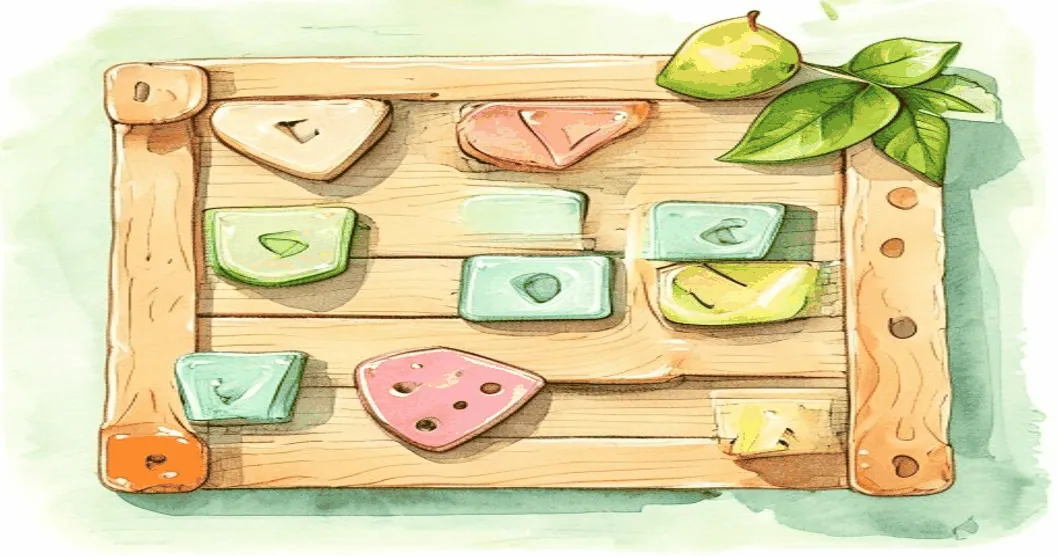
| Before Dhuhr | Hands-on time: Arabic letter tray, sorting, building, outdoor play |
| After Dhuhr | Lunch, quiet time or nap |
| After Asr | Outdoors, nature walk, “Who made this?” talk |
| After Maghrib | Dinner, story of a Prophet told by you, sleeping duas |
Our free Daily Routine Builder lets you lay out this order on one page and stick it on the fridge.
Formal “learning” time for a 2-4 year old should be short: 10 to 20 minutes in total, broken up. The rest of their learning happens through play, chores and conversation. The Prophet (ﷺ) said:
وَأَنَّ أَحَبَّ الأَعْمَالِ أَدْوَمُهَا إِلَى اللَّهِ، وَإِنْ قَلَّ
“…and the most beloved deed to Allah is the most regular and constant, even if it were little.” (al-Bukhari 6464)
Ten minutes every day beats an hour once a week.
A 12-week Islamic preschool plan
Repeat each week’s focus every day that week. Keep the old ones going as revision.
| Week | Qur’an | Dua / dhikr | Arabic | Adab |
|---|---|---|---|---|
| 1 | Listen: al-Fatihah | Bismillah before eating | ا ب ت | Eat with the right hand |
| 2 | Al-Fatihah, verses 1-2 | Alhamdulillah after eating | ث ج ح | Saying salam at the door |
| 3 | Al-Fatihah, verses 3-4 | Dua when sneezing (Alhamdulillah) | خ د ذ | Sharing toys |
| 4 | Al-Fatihah, verses 5-7 | Sleeping dua | ر ز س | Saying “jazakallahu khayran” |
| 5 | Revise al-Fatihah | Waking dua | ش ص ض | Gentle hands |
| 6 | Al-Ikhlas | Leaving the house dua | ط ظ ع | Waiting your turn |
| 7 | Al-Ikhlas revision | Entering the house: Bismillah and salam | غ ف ق | Tidying up after play |
| 8 | Al-Falaq | Toilet duas | ك ل م | Not interrupting |
| 9 | Al-Falaq revision | After wudu (listen only) | ن ه و ي | Kindness to animals |
| 10 | An-Nas | Rabbi zidni ‘ilma | Revise all letters | Helping at home |
| 11 | Revise all four surahs | Revise all duas | Letter hunt around the house | Speaking softly |
| 12 | Recite all four to Baba | Revise | Name 10 things in Arabic | Visiting family manners |
For “Rabbi zidni ‘ilma” (رَبِّ زِدْنِي عِلْمًا, “My Lord, increase me in knowledge”, Ta-Ha 20:114), we say it together before circle time every day.
If a week does not stick, repeat it. Toddlers are not on a deadline.
How to teach at this age (method matters more than materials)
- Short and often. Three 5-minute moments beat one 15-minute lesson.
- Real objects over worksheets. Sand trays, wooden letters, a basket of fruit for counting.
- Repeat, repeat, repeat. Toddlers love doing the same thing again. That is how they learn.
- Praise the effort. “MashaAllah, you said Bismillah all by yourself!”
- Keep your materials free of images of living beings. Choose letter cards, nature items and blocks rather than character books and cartoons. It also keeps things calmer.
- Screens are not teachers. At this age, a parent’s voice beats any app.
Common worries
“My toddler will not sit still.” She is not supposed to. Teach while she moves: recite while she builds, say duas on the walk.
“I have a baby too.” Do circle time during the baby’s nap, or with the baby on your lap. Toddlers love being “the big one” who helps.
“Am I behind?” There is no behind at two, three or four. If your child knows Allah made everything, says Bismillah, recites al-Fatihah with you and is learning to be kind, you are doing beautifully.
Frequently asked questions
What should a 3-year-old learn in Islamic preschool?
Focus on six things: knowing Allah made everything, listening to and starting al-Fatihah, duas at mealtimes and bedtime, recognising Arabic letter shapes and sounds, basic manners like salam and sharing, and standing beside you in salah.
How many hours a day should Islamic preschool at home take?
For ages 2 to 4, about 10 to 20 minutes of focused learning, broken into short moments. The rest is play, chores, outdoor time and conversation.
Do I need an Islamic preschool curriculum?
No. A simple plan like the 12-week table above, plus consistency, is enough. When your child is ready for more structure, move on to our guide to Islamic homeschool for 5 to 7 year olds.
When should my child start memorising Qur’an?
Many children start listening from birth and memorising short lines around age three. Follow your child: if they enjoy repeating, begin gently.
Should I teach reading and maths too?
Yes, lightly and through play: counting dates, sorting shapes, chanting letter sounds. Formal reading can wait until your child shows readiness, often around 4 to 6.
Where to go next
If you are just getting started, read Islamic homeschooling for beginners for the first steps, then set up your day with the Daily Routine Builder. When your little one turns five, our 5 to 7 year old guide picks up exactly where this one ends.
May Allah make our children the coolness of our eyes, and make us patient teachers for them. Ameen.