· Umm Aishah · 10 min read
Morning and Evening Adhkar for Kids: A Short Starter List + Printable Cards
The authentic morning and evening adhkar we teach our children first, with exact Arabic, how many times to say each, its source and grading, and an order to learn them in.
The full morning and evening adhkar can take an adult fifteen minutes. For a five-year-old, that is a mountain. So in our house we don’t start with the whole book. We start with four short adhkar, said together after Fajr and after ‘Asr, and we add one more every few weeks.
If you only teach your child one set this month, make it this one: the three Quls (three times each), Bismillāhil-ladhī lā yaḍurru… (three times), and the short Allāhumma bika aṣbaḥnā in the morning or bika amsaynā in the evening (once). They take about three minutes, every one of them is authentic, and they carry great protection, by Allah’s permission.
Below is our full starter list for children, with the exact Arabic, how many times to say each one, the source and its grading, and the order we learned them in.
Why teach adhkar to children?
Allah says:
يَٰٓأَيُّهَا ٱلَّذِينَ ءَامَنُوا۟ ٱذْكُرُوا۟ ٱللَّهَ ذِكْرًۭا كَثِيرًۭا وَسَبِّحُوهُ بُكْرَةًۭ وَأَصِيلًا
“O you who have believed, remember Allah with much remembrance, and exalt Him morning and afternoon.” (al-Ahzab 33:41-42)
And the Prophet (ﷺ) taught children directly. Ibn ‘Abbas (may Allah be pleased with him) said that he was riding behind the Prophet (ﷺ) one day when he said: “O boy, I will teach you some words: Be mindful of Allah and He will protect you…” (at-Tirmidhi 2516, graded sahih by al-Albani). The adhkar are some of the first “words” we can give our own children.
When to say them
We say the morning adhkar after Fajr and the evening adhkar after ‘Asr, following the ayah above (“morning and afternoon”). With little ones who sleep after Fajr, we say the morning set together at breakfast instead.
The starter list: say these morning and evening
1. The three Quls (3 times each)
قُلْ هُوَ اللَّهُ أَحَدٌ · قُلْ أَعُوذُ بِرَبِّ الْفَلَقِ · قُلْ أَعُوذُ بِرَبِّ النَّاسِ
Recite Sūrat al-Ikhlāṣ, Sūrat al-Falaq and Sūrat an-Nās in full, three times each, in the morning and in the evening. The Prophet (ﷺ) said they “will suffice you against everything.”
Source: Abu Dawud 5082, graded hasan by al-Albani; also at-Tirmidhi 3575.
Most children already know these surahs, which makes this the perfect first dhikr.
2. Protection from sudden harm (3 times)
بِسْمِ اللَّهِ الَّذِي لَا يَضُرُّ مَعَ اسْمِهِ شَيْءٌ فِي الْأَرْضِ وَلَا فِي السَّمَاءِ، وَهُوَ السَّمِيعُ الْعَلِيمُ
Bismillāhil-ladhī lā yaḍurru ma’asmihi shay’un fil-arḍi wa lā fis-samā’, wa huwas-samī’ul-‘alīm
“In the name of Allah, with whose name nothing on earth or in the heavens can cause harm, and He is the All-Hearing, the All-Knowing.”
Three times in the morning and three times in the evening. Whoever says it three times will not be struck by a sudden affliction until the morning, and whoever says it in the morning three times, until the evening.
Source: Abu Dawud 5088, graded sahih by al-Albani; also at-Tirmidhi 3388.
3. Morning: “By You we enter the morning” (once)
اللَّهُمَّ بِكَ أَصْبَحْنَا، وَبِكَ أَمْسَيْنَا، وَبِكَ نَحْيَا، وَبِكَ نَمُوتُ، وَإِلَيْكَ النُّشُورُ
Allāhumma bika aṣbaḥnā, wa bika amsaynā, wa bika naḥyā, wa bika namūtu, wa ilayka an-nushūr
“O Allah, by You we enter the morning and by You we enter the evening, by You we live and by You we die, and to You is the rising.”
Once, in the morning.
Source: Abu Dawud 5068, graded sahih by al-Albani.
4. Evening: “By You we enter the evening” (once)
اللَّهُمَّ بِكَ أَمْسَيْنَا، وَبِكَ أَصْبَحْنَا، وَبِكَ نَحْيَا، وَبِكَ نَمُوتُ، وَإِلَيْكَ النُّشُورُ
Allāhumma bika amsaynā, wa bika aṣbaḥnā, wa bika naḥyā, wa bika namūtu, wa ilayka an-nushūr
“O Allah, by You we enter the evening and by You we enter the morning, by You we live and by You we die, and to You is the rising.”
Once, in the evening.
Source: at-Tirmidhi 3391, graded sahih by al-Albani (at-Tirmidhi said hasan).
Ask your child to spot what swapped between the two.
Next steps: add these one at a time
When the first four are solid, add one of these every two to four weeks.
5. Well-being and protection on every side (once)
اللَّهُمَّ إِنِّي أَسْأَلُكَ الْعَافِيَةَ فِي الدُّنْيَا وَالْآخِرَةِ، اللَّهُمَّ إِنِّي أَسْأَلُكَ الْعَفْوَ وَالْعَافِيَةَ فِي دِينِي وَدُنْيَايَ وَأَهْلِي وَمَالِي، اللَّهُمَّ اسْتُرْ عَوْرَاتِي، وَآمِنْ رَوْعَاتِي، اللَّهُمَّ احْفَظْنِي مِنْ بَيْنِ يَدَيَّ، وَمِنْ خَلْفِي، وَعَنْ يَمِينِي، وَعَنْ شِمَالِي، وَمِنْ فَوْقِي، وَأَعُوذُ بِعَظَمَتِكَ أَنْ أُغْتَالَ مِنْ تَحْتِي
“O Allah, I ask You for well-being in this life and the next. O Allah, I ask You for pardon and well-being in my religion, my worldly life, my family and my wealth. O Allah, cover my faults and calm my fears. O Allah, guard me from in front, behind, my right, my left and above me, and I seek refuge in Your greatness from being taken unaware from beneath me.”
Once in the morning and once in the evening. Ibn ‘Umar said the Prophet (ﷺ) never left these words morning or evening.
Source: Abu Dawud 5074, graded sahih by al-Albani; also Ibn Majah 3871.
Teaching tip: for “in front, behind, right, left, above, below”, let your child point in each direction as they say it. They learn it in days.
6. Subḥānallāhi wa biḥamdih (100 times)
سُبْحَانَ اللَّهِ وَبِحَمْدِهِ
Subḥānallāhi wa biḥamdih: “Glory be to Allah, and praise be to Him.”
100 times in the morning and 100 times in the evening. The Prophet (ﷺ) said no one will come on the Day of Resurrection with anything better, except someone who said the same or more.
Source: Muslim 2692 (sahih). Al-Bukhari 6405 adds that whoever says it one hundred times in a day has his sins wiped away even if they are like the foam of the sea.
Little ones can start with ten, then thirty, building up. Count on the fingers of the right hand, as the Prophet (ﷺ) did (Abu Dawud 1502, graded sahih by al-Albani). He also told the women Companions to count on their fingertips, “for they will be questioned and made to speak” (Abu Dawud 1501, graded hasan by al-Albani). Children love the idea that their fingers will be witnesses for them.
7. The best way of asking forgiveness: Sayyid al-Istighfār (once)
اللَّهُمَّ أَنْتَ رَبِّي لَا إِلَهَ إِلَّا أَنْتَ، خَلَقْتَنِي وَأَنَا عَبْدُكَ، وَأَنَا عَلَى عَهْدِكَ وَوَعْدِكَ مَا اسْتَطَعْتُ، أَعُوذُ بِكَ مِنْ شَرِّ مَا صَنَعْتُ، أَبُوءُ لَكَ بِنِعْمَتِكَ عَلَيَّ، وَأَبُوءُ لَكَ بِذَنْبِي فَاغْفِرْ لِي، فَإِنَّهُ لَا يَغْفِرُ الذُّنُوبَ إِلَّا أَنْتَ
“O Allah, You are my Lord; none has the right to be worshipped but You. You created me and I am Your servant, and I keep Your covenant and promise as much as I can. I seek refuge in You from the evil of what I have done. I admit Your favour upon me and I admit my sin, so forgive me, for none forgives sins except You.”
Once in the morning and once in the evening. Whoever says it in the day with certainty and dies before evening, or says it at night and dies before morning, is from the people of Paradise.
Source: al-Bukhari 6306 (sahih).
This is longer, so we teach it to children from about seven, a line a week.
8. Evening: “We have entered the evening” (once)
أَمْسَيْنَا وَأَمْسَى الْمُلْكُ لِلَّهِ، وَالْحَمْدُ لِلَّهِ، لَا إِلَهَ إِلَّا اللَّهُ وَحْدَهُ لَا شَرِيكَ لَهُ، لَهُ الْمُلْكُ وَلَهُ الْحَمْدُ وَهُوَ عَلَى كُلِّ شَيْءٍ قَدِيرٌ، رَبِّ أَسْأَلُكَ خَيْرَ مَا فِي هَذِهِ اللَّيْلَةِ وَخَيْرَ مَا بَعْدَهَا، وَأَعُوذُ بِكَ مِنْ شَرِّ مَا فِي هَذِهِ اللَّيْلَةِ وَشَرِّ مَا بَعْدَهَا، رَبِّ أَعُوذُ بِكَ مِنَ الْكَسَلِ وَسُوءِ الْكِبَرِ، رَبِّ أَعُوذُ بِكَ مِنْ عَذَابٍ فِي النَّارِ وَعَذَابٍ فِي الْقَبْرِ
“We have entered the evening and the dominion belongs to Allah; praise is for Allah. None has the right to be worshipped but Allah, alone, without partner; His is the dominion and the praise and He is over all things capable. My Lord, I ask You for the good of this night and what follows it, and seek refuge in You from its evil and the evil of what follows it. My Lord, I seek refuge in You from laziness and the misery of old age; from punishment in the Fire and punishment in the grave.”
Once in the evening. In the morning the Prophet (ﷺ) said the same, beginning aṣbaḥnā wa aṣbaḥal-mulku lillāh (“we have entered the morning and the dominion belongs to Allah”).
Source: Muslim 2723 (sahih).
9. Evening: refuge in Allah’s perfect words
أَعُوذُ بِكَلِمَاتِ اللَّهِ التَّامَّاتِ مِنْ شَرِّ مَا خَلَقَ
A’ūdhu bi-kalimātillāhit-tāmmāti min sharri mā khalaq: “I seek refuge in the perfect words of Allah from the evil of what He has created.”
In the evening. A man came to the Prophet (ﷺ) after being stung by a scorpion in the night, and he said that had he said these words in the evening, it would not have harmed him.
Source: Muslim 2709 (sahih). It is also said whenever you stop at a place (Muslim 2708).
Short, and children like the scorpion story.
The order we learned them in
| Weeks | Add | Time to say |
|---|---|---|
| 1 to 2 | Three Quls (×3) | ~2 min |
| 3 to 4 | Bismillāhil-ladhī lā yaḍurru (×3) | +30 sec |
| 5 to 6 | Bika aṣbaḥnā / bika amsaynā (×1) | +20 sec |
| 7 to 8 | A’ūdhu bi-kalimātillāh (evening) | +10 sec |
| 9 to 12 | Allāhumma innī as’alukal-‘āfiyah (×1) | +1 min |
| 13 onwards | Subḥānallāhi wa biḥamdih, building to 100 | +2 to 3 min |
| Age 7+ | Sayyid al-Istighfār, then Amsaynā wa amsal-mulk | +2 min |
How to make it stick
- Same time, same spot. Our adhkar happen on the prayer mat right after Fajr and ‘Asr. The place becomes the reminder.
- Say it aloud, together. Children learn adhkar by hearing them, not reading them.
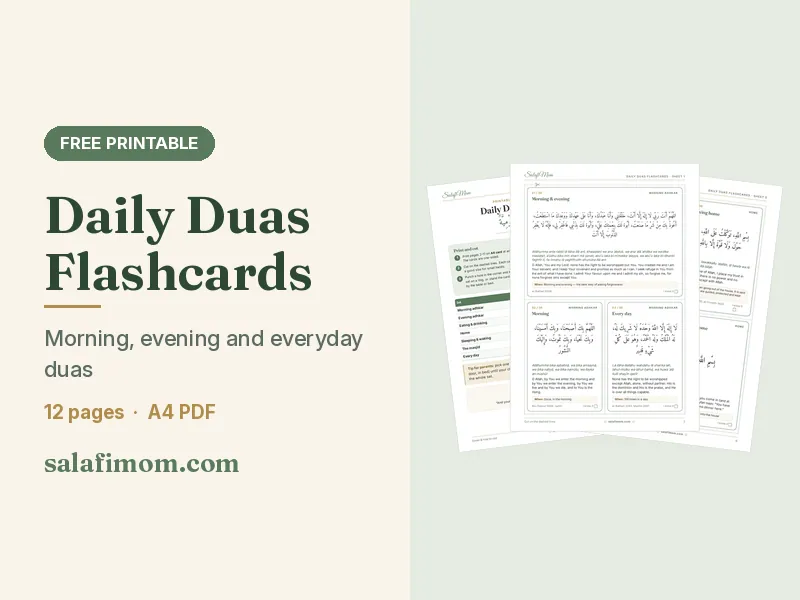
- Use cards until it’s memorised. Our free Daily Duas Flashcards include the morning and evening adhkar with Arabic, transliteration and source. Hole-punch them onto a ring and keep it by the prayer mat. For one dhikr at a time, put a Dua of the Day card on the fridge for the week.
- Explain one meaning. “Lā yaḍurru means nothing can harm. Who protects us? Allah.” Meaning makes the words dear to them.
- Keep it calm. No prizes for speed. A slow, clear dhikr is the goal.
For how the morning adhkar fit into the rest of our day, see our Islamic morning routine for homeschool families. For the other daily duas (eating, leaving the house, the toilet), see daily duas for children, and for the character side, building adab in young children. The adhkar for sleep are in our Sunnah bedtime routine for kids.
Frequently asked questions
What morning adhkar should a child learn first?
The three Quls (three times each) and Bismillāhil-ladhī lā yaḍurru… (three times). They are short, authentic (Abu Dawud 5082 and 5088), and said both morning and evening.
How many times should kids say the morning and evening adhkar?
Follow the numbers in the narrations: the three Quls and Bismillāhil-ladhī three times each, Subḥānallāhi wa biḥamdih 100 times, and most of the others once. Young children can build up to 100 gradually.
What age should children start the morning and evening adhkar?
As soon as they can repeat after you, often around three. Start with the three Quls and add slowly.
Is there a printable list of adhkar for kids?
Yes. Our free Daily Duas Flashcards include the morning and evening adhkar, each with Arabic, transliteration, meaning and source.
Should children count dhikr on their fingers?
Yes. The Prophet (ﷺ) counted tasbih on his right hand (Abu Dawud 1502, graded sahih by al-Albani), and told the women Companions to count on their fingertips because they will be made to speak (Abu Dawud 1501, graded hasan by al-Albani).
May Allah make our children among those who remember Him much, morning and evening. Ameen.